

Why Your Body Repairs Some Injuries Quickly While Others Take Months
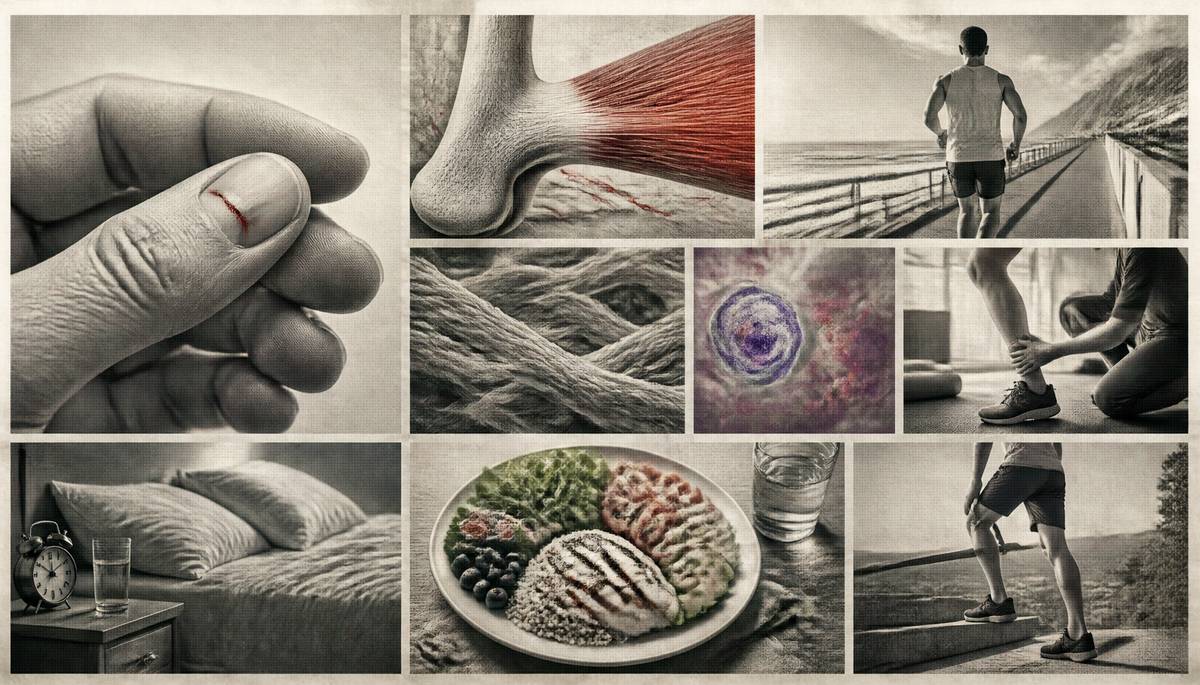 Your body can repair a paper cut before you've finished complaining about it, yet a damaged tendon might still be causing trouble six months later. This apparent inconsistency raises an interesting question. If the human body possesses such remarkable powers of regeneration, why does it approach certain repairs with the urgency of an emergency plumber and others with the enthusiasm of a council planning department?
The answer lies in the different biological environments within our tissues. Healing isn't a single process operating at a uniform speed. It's a complicated sequence of cellular activities influenced by blood circulation, tissue structure, inflammation and the availability of essential building materials.
Blood Supply Makes All the Difference
Blood is effectively the body's delivery service, transporting oxygen, nutrients, immune cells and chemical messengers to damaged areas. Tissues with abundant blood supplies generally have better access to the resources required for repair.Skin, for example, contains extensive networks of tiny blood vessels. When you suffer a minor cut, platelets rapidly form a clot while immune cells begin clearing damaged material and protecting against infection. Nearby cells multiply and migrate across the wound, gradually restoring the protective barrier.
Tendons, however, are considerably less fortunate. These tough structures connect muscles to bones and contain relatively few blood vessels compared with skin or muscle. Consequently, injured tendons receive a more limited supply of the materials necessary for reconstruction. Healing can take months, particularly when the tendon must withstand substantial mechanical forces during everyday activities.
Cartilage faces an even greater challenge. The smooth cartilage covering joint surfaces has no direct blood supply, relying largely on diffusion from surrounding joint fluid for nourishment. Its capacity for self-repair is therefore extremely limited. Unfortunately, knees cannot simply order replacement cartilage and expect delivery by Thursday.
Collagen Is the Body's Construction Material
Collagen is the most abundant protein in the human body, providing structural strength to skin, tendons, ligaments and numerous other tissues. Following an injury, specialised cells called fibroblasts produce collagen to help rebuild damaged structures.However, producing collagen is only part of the job. Newly formed fibres must gradually become organised and strengthened according to the mechanical demands placed upon them. In tendons and ligaments, this remodelling process can continue long after pain and swelling have diminished.
Different tissues also contain different arrangements and types of collagen. Skin requires flexibility alongside strength, while tendons need densely organised fibres capable of transmitting considerable force. Reconstructing these specialised arrangements takes time, which explains why an injury can feel substantially better before the affected tissue has regained its original resilience.
Inflammation Is Not Always the Enemy
Inflammation frequently receives negative publicity, but it performs an essential role during the early stages of healing. Increased blood flow and immune activity help remove damaged cells, control infection and initiate tissue repair.Problems arise when inflammation becomes excessive, persists unnecessarily or interferes with normal recovery. The objective is therefore not to eliminate every inflammatory response, but to allow the body to progress through its natural repair stages without unnecessary complications.
Cells Have Their Own Communication Network
Healing depends on considerably more than individual cells working independently. Damaged tissues release chemical signals that coordinate the activities of immune cells, fibroblasts and other specialised repair mechanisms. Growth factors, cytokines and various signalling molecules help determine when cells should multiply, migrate or begin producing new structural material.This communication system is remarkably sophisticated, although occasionally about as efficient as an office email chain involving seventeen departments. If signals become disrupted by persistent inflammation, poor circulation or underlying illness, recovery may slow considerably.
Age also influences cellular behaviour. Older tissues often contain fewer actively dividing repair cells, while changes in collagen production and immune regulation can make healing less efficient. Nevertheless, biological age is only one factor. Physical fitness, nutrition and general health can substantially influence recovery at almost any stage of life.
Why Complete Rest Can Sometimes Make Things Worse
The traditional response to injury was often straightforward: stop moving and wait. However, modern rehabilitation increasingly recognises that appropriate movement can encourage tissue recovery, particularly in muscles, tendons and ligaments.Controlled mechanical loading stimulates cells to organise collagen fibres along the directions of physical stress. Gradually increasing activity can improve strength, flexibility and the tissue's ability to tolerate everyday demands.
The important distinction is between beneficial loading and excessive strain. Returning to strenuous exercise too early can aggravate damaged structures, while prolonged immobilisation may contribute to stiffness, muscle weakness and reduced tissue resilience. Fractures, severe tears and certain surgical repairs require specific restrictions, so rehabilitation should reflect the injury rather than an enthusiastic determination to prove that everything is fine.
Food, Sleep and the Repair Department
Tissue regeneration requires energy and raw materials. Protein supplies amino acids necessary for constructing collagen and other structural components, while vitamin C supports normal collagen formation. Zinc, iron and other micronutrients also participate in cellular processes associated with healing.A varied diet containing sufficient protein, vegetables, fruit and healthy fats generally provides a sensible foundation. Severe calorie restriction during recovery can be counterproductive because the body requires additional resources to rebuild damaged tissue.
Sleep is equally important. During rest, the body regulates hormones, immune activity and numerous metabolic processes involved in maintenance and repair. Persistent sleep deprivation can interfere with these mechanisms, making adequate rest a practical part of recovery rather than an optional luxury.
Smoking deserves particular attention because nicotine and other tobacco-related substances can impair circulation and tissue healing. Poorly controlled diabetes can also delay recovery through effects on blood vessels, nerves and immune function.
Making a Healing Impression
Perhaps the most important lesson is that disappearing pain does not necessarily indicate completed healing. A tendon may feel comfortable during ordinary walking while remaining insufficiently prepared for sprinting, jumping or carrying heavy loads.Recovery therefore requires patience, progressive activity and realistic expectations. Persistent pain, worsening swelling or failure to improve warrants professional assessment, particularly when an injury affects normal movement.
Human tissues possess extraordinary repair capabilities, but each operates according to its own biological timetable. Skin might finish its paperwork within days, while cartilage barely acknowledges receiving the application. Understanding these differences makes it easier to support recovery without demanding that every injured body part meet the same deadline.
Article kindly provided by maylene.uk
Latest Articles
- Why Your Body Repairs Some Injuries Quickly While Others Take Months
- Could Your Home's Plumbing Be Affecting Your Health Without You Realising?
- Toothache: When to Monitor, Call Soon or Seek Urgent Dental Care
- Your Donor Hair Is a Finite Resource: Why Hair Restoration Needs a Long-Term Budget
- Why Your Fitness Routine Needs More Easy Days, Not More Hard Ones
- The Hidden Hair Loss Triggers Most People Never Think About
- The Mouth-Body Connection Most People Ignore
- The Psychology of Texture in Wellness Photography
- When DIY Beauty Goes Too Far: Treatments Better Left to Professionals
- The Hidden Link Between Jaw Tension and Everyday Headaches
- Sleep Timing Shapes Hormones More Than You Think
- How Subconscious Habits Affect Your Skin Health
- Fragrance Fatigue Is Real: How Smaller Bottles Help Your Nose Stay Sharp
- Traveling with a Baby: Smart Packing Strategies for Modern Parents
- How Oral Health Quietly Influences Energy Sleep and Long Term Well Being
- How Emotions Affect Your Skin
- Everyday Walks as Brain Games for Your Dog
- How Light Weights Can Build Serious Strength
- Missing Dental Supplies and What They're Really Telling You
- Rethinking Early Intervention Strategies for Childhood Behavior Support
- Nutrition and Dietetics
- Exercise and Fitness
- Meditation and Yoga
- Mental Health
- Women's Health
- Men's Health
- Children's Health
- Senior Health
- Heart Health
- Sleep Health
- Skin Health
- Eye Health
- Dental Health
- Pain Management
- Addiction and Recovery
- Sexual and Reproductive Health
- Alternative Medicine
- Chronic Conditions
- Weight Management
- Occupational Health and Safety
- Public Health
- General Health Tips
- Beauty